Use Codex Plan Mode Before You Touch the Code
A plan-first workflow that catches wrong assumptions before they become expensive edits.
The fastest way to make a coding task slow is to start editing before the problem is understood. Plan mode creates a deliberate pause: the agent explores the repository, identifies the relevant systems, states assumptions, and proposes a sequence before it changes anything.
That pause is especially valuable when a feature crosses several files, the repository is unfamiliar, or a mistake could affect production data, authentication, billing, or deployment.
What a good plan should contain
If a plan is only a restatement of your prompt, it has not done enough work. Ask the agent what could invalidate the approach, what existing pattern it will follow, and where the change is most likely to break.
- A short description of the current behavior and desired outcome
- The files and systems likely to change, with a reason for each
- Important assumptions and unanswered questions
- The smallest sensible implementation sequence
- Tests and checks that will prove the change works
- Risks, edge cases, and an easy rollback path
Plan, challenge, execute, verify
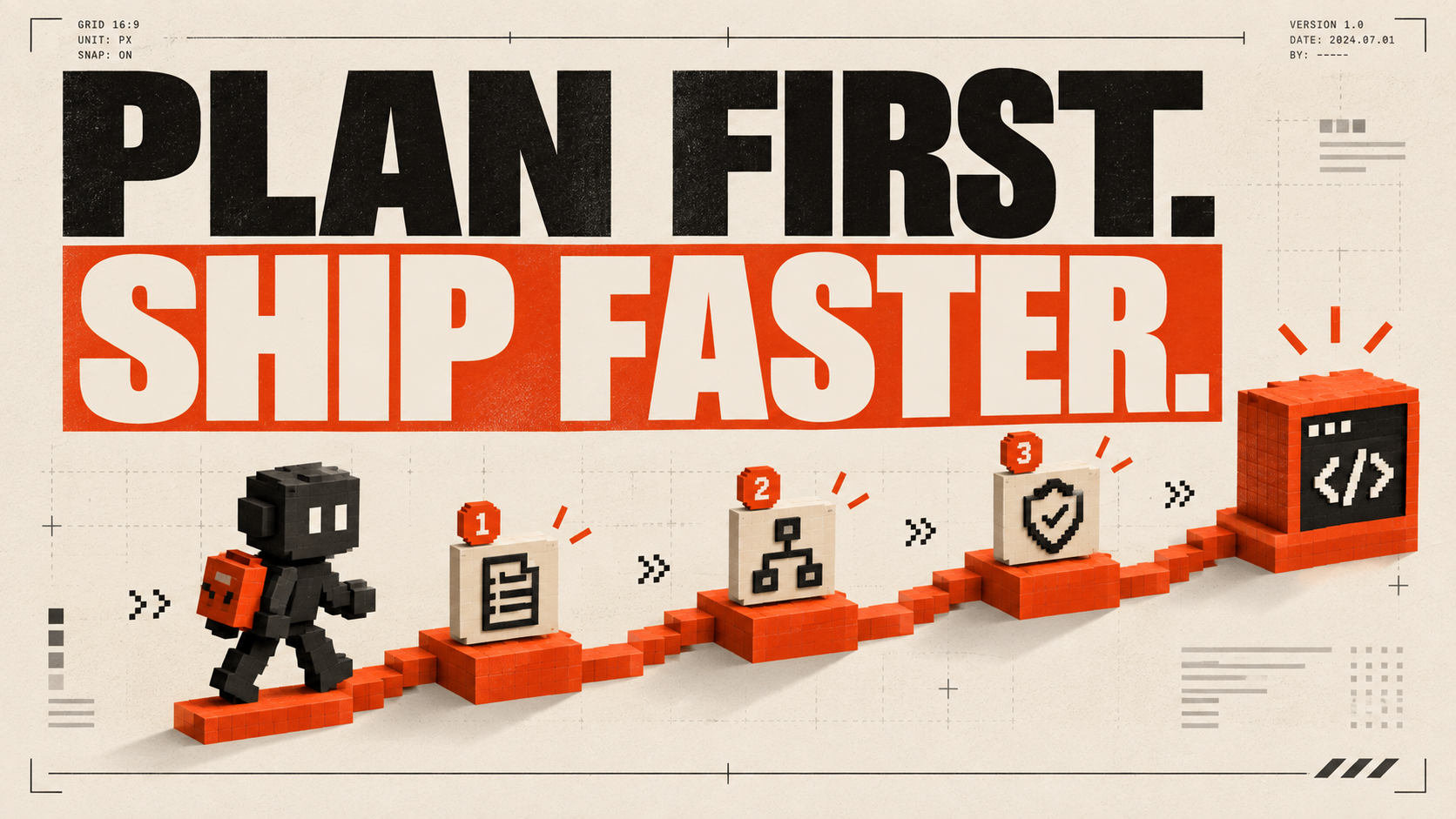
Use a four-step rhythm. First, ask Codex to inspect and plan without editing. Second, challenge the plan: request alternatives, tradeoffs, and the strongest reason not to use its preferred approach. Third, approve a bounded implementation. Fourth, review the diff and run the agreed checks.
This is not bureaucracy. It moves the cheapest decisions to the beginning. Rewriting three bullets in a plan is faster than unwinding an architecture change across twelve files.
When planning matters most
- Changes that touch authentication, permissions, payments, or user data
- Work across frontend, backend, database, and deployment boundaries
- Large refactors where behavior must remain stable
- Tasks with several plausible technical approaches
- Any repository you or the agent do not yet understand
Make the plan testable
End every plan with a definition of done that a teammate can verify. Name the exact user journey, automated tests, lint or type checks, and production build needed. If visual behavior changes, include a visual check. If data changes, include migration and rollback validation.
Plan mode is not about producing a long document. It is about reaching shared understanding before the first edit. A short, specific, testable plan is one of the highest-leverage tools in AI-assisted development.
Go from reading to building.
Join the Claude Code & Codex classroom for structured lessons, practical workflows, and a community of builders shipping with AI.
Join the free classroom